


Overinflated tires are more likely to blow out or lose traction, causing a skid. Under-inflated tires tend to overheat and experience tread separation. Whether you’re driving in Baltimore, MD, or anywhere else, it’s important to check tire pressure regularly. Here’s how to do it in seven simple steps.
Set an Appropriate Schedule
Inspecting your tires should become routine. It’s recommended to measure your tire pressure once a month, or twice a month if you drive more frequently. And always check your tires before you set off on a long journey that will put your tires under a lot of pressure.
Prepare the Necessary Tools
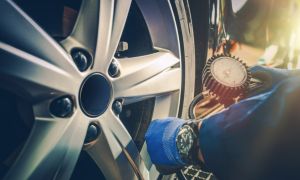
The only tools you’ll need for this job are a tire pressure gauge and an air compressor. You can buy both at most auto parts stores. You can also find an air compressor at your local gas station. Many states require by law that air is provided for free to any driver who needs it at a gas station.
Digital vs. Analog Pressure Gauges
You’ll need to purchase your own tire pressure gauge. You can use either a digital gauge or an analog one. Digital gauges tend to be more durable and slightly more accurate over time. But they’re also more expensive, and they need batteries.
Start When the Tires Are Cold
You’ll need to wait at least three hours after driving for the air inside your tires to be completely cold. You’ll only get an accurate PSI reading when the tires are cold because heat from the road temporarily expands the air, artificially pumping up pressure readings. For this reason, many drivers only check their tires first thing in the morning.
Know Your Vehicle’s Optimal PSI
The recommended tire pressure for most cars falls between 32 and 36 pounds per square inch (PSI). To find out the optimal tire pressure for your car, look in your owner’s manual. You will also see this figure on a sticker inside the driver-side door of your car.
Take Off the Air Valve
Each tire has a thin air valve that pokes out of the sidewall. Remove the valve’s cap and keep it in your pocket where you won’t lose it. A little air will hiss out when you take off the cap, which is fine.
If you haven’t checked your tires for a while, the cap might be a bit stiff. You can use a pair of pliers to help unscrew it.
Apply the Pressure Gauge to the Valve
Press the gauge against the valve and after a second or two, you’ll be given a PSI reading. Compare this reading to your vehicle’s optimal PSI.
Adjust Air as Required
Add air if the PSI reading is too low, and remove air if the reading is too high. To add air, use the air compressor. To remove air, you can press the little dot on the back of your gauge against the valve. This will let the air out.
Whether you’re adding or removing air, make the changes in little increments, checking the PSI in between each one. When the PSI is just right, put the valve cap back on and check the next tire.
Whether you handle the task yourself or need a local professional to handle the care of your tires, we can help here at DARCARS Toyota of Baltimore! Visit our blog to learn more ways to maintain your car or click here to schedule a service appointment with us!
Connect with us


Recent Blog Entries
- A Closer Look at the Trim Levels of the 2024 Toyota Tacoma: Tailored for the Off-Road Enthusiast
- The 2024 Toyota GR Corolla: A Thrilling Ride
- The 2024 Toyota Crown: Luxury and Innovation in Harmony
- Exploring the Trim Levels of the 2024 Toyota Corolla: A Guide for Every Driver
- The 2024 Toyota Camry: A New Chapter in the Legacy of Comfort and Style