DARCARS Toyota of Baltimore

Blog / Living in Maryland

3 Bad Driving Habits To Avoid in Baltimore, MD

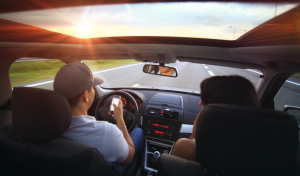
Person texting and driving in Baltimore, MD
Baltimore, MD, has over 600,000 people and over 140,000 others commuting into the city every day. Many of the people in our city will be driving, and this makes it very important to be careful when you're driving. Bad driving habits, with so many drivers and pedestrians around, can easily lead to an accident. To keep you safe, these are some bad habits to avoid when you're driving.

Distracted Driving

It's very easy to become distracted, especially if you're stuck in slow-moving traffic or you're driving a route you're very familiar with. This familiarity tends to make one's mind wander onto other things. The danger of being distracted means that you're not concentrating on the road ahead. A car ahead, for example, may suddenly slow down, or a pedestrian may step off the sidewalk. If you're distracted, you may not see either of these scenarios in time. As a driver, one of the most important things to be aware of is the area around you as you move. When you're focusing on the vehicles and people around you, you’ll be better able to prevent an accident and keep yourself and your car safe.  

Tailgating

Tailgating is a very dangerous practice, and it involves following the car in front of you as closely as possible. There are many reasons why drivers tailgate, including anger at the slower pace of the vehicle ahead, being in a hurry to get somewhere, or even being distracted and not paying attention to distance. Regardless of the reason, tailgating can very easily cause an accident.   If the vehicle ahead slows down or stops, it's vital to have time to slow down yourself. A collision is likely when there isn't enough distance between your car and the vehicle ahead. If you rear-end a car in front of you, you will likely face three serious problems. Your vehicle will be damaged and need repairs, the driver ahead of you may sue you for damages, and you may receive a ticket for tailgating.  

Driving With Your High Beams

High beams are essential for safe driving in low light conditions when you can't see the road ahead. They can, however, cause an accident if drivers are coming toward you or if people step into the street. Some drivers can forget to switch their high beams to low beams, and other drivers, unfortunately, will deliberately keep their high beams on.   If you're driving toward a vehicle with high beams, you'll notice how difficult it is to see what's coming toward you. You won't be able to judge the size and distance away of the vehicle ahead of you, and this can result in an accident. We advise that your high beams always be turned down if other cars are ahead of you.   It's easy, unfortunately, to slide into bad habits when driving. When you're aware of bad habits, it becomes easy to avoid them. If you're interested in a new Toyota car with the latest safety features, we suggest checking out the 2022 Toyota Camry Hybrid today. Or perhaps click here if you'd like to read more helpful driving advice from our Baltimore, MD dealership.

Posted in:

Related Posts

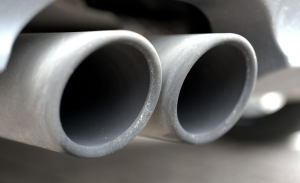
Car Exhaust Pipe in Baltimore, MD

How Often Do You Need a Car Emissions Test in Baltimore, MD?

There are several different emissions tests, each of which is designed to test the level of dangerous chemicals emitted by your engine. If your car is found to emit more chemicals than it should, your car will need to be examined by technicians to correct the problem. Emissions tests are due every two years, and these tests coincide with your registration renewal. New cars and hybrid cars are not required to have an emissions test until the third year after their first registration. Certain other categories of cars are not subject to emissions testing due to age. Electric cars also do not undergo emissions testing as they produce no emissions regardless of age. What Do You Need for the Test? You need to book a test at one of the emissions testing centers in Maryland. These testing centers are certified by the Maryland Motor Vehicle Administration (MMVA). You'll need to take your driver's license, emission test notification letter, proof of insurance, and payment for the test. If you don't yet have your emissions test letter, you can take your registration renewal letter instead. more Types of Test There are several different tests, as mentioned above, but your car will only need to take one of them. These are the different tests and their requirements. Onboard Diagnostic Test This test applies to all vehicles from 1996 onwards that weigh up to 8,500 pounds. In this test, your car's computer is connected to the testing center's diagnostic system. This system interrogates your computer and then produces a printout of the level of emissions if any. Gas Cap Test This test is performed on vehicles manufactured between 1977 and 1985. It tests the gas cap to ensure that it fits securely, has effective seals, and can't leak gases from the fuel tank. Tailpipe Test This test also applies to vehicles made between 1977 and 1985, and it tests the level of emissions that exit the tailpipe when your engine is running. After the Test If you've passed the test, you'll be issued a Vehicle Emissions Inspection Program (VEIP) certificate. This certificate needs to be submitted with your registration renewal documents. The testing center will also upload a copy of the results to the MMVA. Now that you’re prepared with everything you need to know about car emissions tests, continue to benefit from more knowledge as a Maryland driver by reading similar blogs like “ How to Transfer Vehicle Ownership” or “ How Much is the Average Cost of Owning A Car?” today! Image by Pixabay

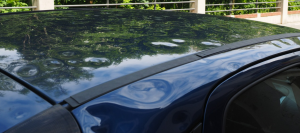
Dented Car in Baltimore, MD

What Should You Do If Your Toyota Gets Dented in Baltimore, MD?

All cars get dented sooner or later. But if you've bumped into something or someone else has knocked into you, leaving their mark, there's no need to despair. Car dents can sometimes be repaired at home using one of the following techniques. Of course, a technician at your local Toyota dealership can also sort it out for you. Suction Cup Dent Remover The easiest way to fix it yourself is with a specially designed suction cup kit. These tools come in different sizes for all different kinds of dents. They also come with instructions on how to prepare the bodywork, apply the suction cup tool, and yank the dented metal back out. more Sink or Toilet Plunger You might be surprised how often dents can be sorted out with a simple plunger for your sink or toilet. Either a cup or flange plunger can often do the job. First, pour boiling water over the dented area or heat it with a hairdryer, then apply the plunger and see if it pops back out. Boiling Water Dents commonly occur in plastic areas like the bumper. In this case, you might be able to soften the material with boiling water and then reach behind it and push the dent out with your hand.   The heat from the water causes the plastic material to expand and soften, allowing you to fix it. You might need to repeat the process a few times before your bumper looks good again. Please be very careful any time you use boiling water in this manner. Dry Ice When dealing with dents, it helps to remember that the material of your bodywork wants to spring back to its original shape. That's why dramatically altering the material's temperature can help it pop back out.   One way to do this is with dry ice, which works well for smaller, shallower dents. Make sure you're wearing protective gloves before you begin. Rub the dry ice against the dent until you hear the metal return to its true form. Hairdryer Your dent might have occurred in a place where you're able to apply pressure from the other side. In this case, use a hairdryer on maximum heat to warm up the affected area of bodywork. Then push from the other side. You can use a hairdryer to help prepare the dented material for any of the aforementioned techniques. Ask Your Toyota Dealer to Fix Your Car Dents If you're too busy to attempt the above DIY solutions, ask a technician to fix the dent for you. It's a small job that mechanics solve all day long, so it shouldn’t cost a lot of money. But having a professional fix it might save you a little time and hassle, and you know it'll be done right.   When you're ready to fix a dent yourself, we hope this blog comes in handy! Whether you're looking for more automotive tips or if you have a dent that will need special attention, visit us at DARCARS Toyota of Baltimore. Our auto repair shop will take care of the dents, so you don't have to! Schedule a service with us today!

Defensive driving in Baltimore, MD

4 Defensive Driving Tips for Baltimore, MD Drivers

Stay Alert Arguably the number one rule of driving defensively, alertness means paying close attention not only to your own driving but to the actions of drivers around you. You should also stay apprised of your environment for factors like adverse road conditions or bad weather. Driving defensively is primarily about anticipating a potentially dangerous situation and avoiding it. You can increase your alertness by staying free of distractions such as phones. You should keep your eyes primarily focused ahead and scan well up the road on which you are driving. more Follow Road Rules While you should not assume other drivers will do the same, your own driving will greatly improve if you remain consistent in obeying the rules of the road. This means adhering to all traffic signs and signals and keeping your speed within the posted limit. In addition, when you are merging onto a road, wait until a safe gap in traffic exists.   Another important road rule involves following distance. Keep at least three seconds between you and the vehicle ahead of you. This simple step is an effective anticipatory move that acknowledges you do not know if or when the front driver will suddenly stop. Toyota's Dynamic Radar Cruise Control—available on models from the Avalon to the RAV4—adapts your ride to maintain a safe following distance with the touch of a button. If you're a student driver, click here to learn more about the specific rules you should follow. It's All About Respect Staying respectful and courteous to other drivers and to the driving process itself will keep you out of many precarious situations. Even if another driver is not giving you the same courtesy, remain even-tempered and level-headed. Although it may be difficult in the moment, the best way to deal with an aggressive or disrespectful driver is to yield to them.   De-escalation is key in these cases. Understand that the other driver is actually, at that moment, in control of a very powerful and deadly weapon: their vehicle. If they aren't also in control of themselves, a lot of people could get hurt if you don't de-escalate. Knowledge Is Power As the adage goes, the best offense is a good defense. Traffic schools were made for this concept, and any driver can benefit from a course in driving defensively. Despite popular assumption, these classes are a benefit, not a punishment. They will teach you the fundamentals of driving defensively and provide invaluable aid. Maryland courses include information on road rules, accident prevention, and cooperation techniques.   We hope these tips from our blog at DARCARS Toyota of Baltimore help keep you safe on the roads. Whether you're looking for more driving & car tips or want to learn about new Toyota models, we have you covered!