

DARCARS Toyota of Baltimore

Blog

All Baltimore Toyota Dealer Learn About Toyota Models Tips & Tricks Baltimore Toyota Service Maintaining Your Toyota Living in Maryland Toyota SUVs DARCARS Toyota of Baltimore Service Toyota Hybrid Toyota Trucks Hybrid Cars Baltimore MD Toyota Highlander Driving in Maryland Baltimore Used Cars Toyota Camry Toyota Corolla Toyota EVs Toyota RAV4 Toyota Tacoma Auto Financing in Baltimore MD Baltimore Toyota 4Runner Toyota All-Wheel Drive Toyota bZ4X Toyota Crown Toyota GR Corolla Toyota Highlander Hybrid Toyota Prius Toyota Sienna Toyota Tires Toyota Tundra Used Toyota Car First Aid Kit Car Maintenance Flat Tire Fuel Efficiency Oil Change Baltimore Road Trips Safety Tips Toyota 4-Wheel Drive Toyota 4WD Toyota Accessories Toyota Camry Hybrid Toyota Corolla Cross Toyota Corolla Cross Hybrid Toyota Corolla Hatchback Toyota Express Maintenance Toyota GR86 Toyota Grand Highlander Toyota Grand Highlander Hybrid Toyota Land Cruiser Toyota Maintenance Plans Toyota Nightshade Edition Toyota Prius Prime Toyota RAV4 Hybrid Toyota Sequoia Toyota Summer Services Toyota Sunroof Toyota Towing Capacity Toyota TRD Models Toyota Warranty Transmission Service Used Car Dealer Baltimore Winter Car Maintenance
Student driver in Baltimore, MD

What Rules Do Student Drivers Have to Follow in Baltimore, MD?

Getting your driver's license is incredibly exciting, but if you live in Baltimore, MD, passing your test isn't the end of the road. Student drivers still have to complete specific requirements and keep their driving records clean for at least 18 months. Read on to find out more about the rules you have to follow if you've recently qualified for your provisional driver's license. Overview Once you've completed your driver skills test, you'll obtain your provisional license. During this stage, you can gain more driving experience without direct supervision, but you'll still have to follow a number of rules that are designed to protect you and those around you. If you fail to comply with the restrictions, you risk having your driver's license revoked, and it will be harder for you to get your full license in the future. more Restrictions The most important rule is that you must keep a clean driving record if you want to be eligible for a full driver's license. Anyone under the age of 21 can't have any measurable amount of alcohol in their blood while driving. Those who are still under 18 are not allowed to drive with children for the first 151 days unless they are close family members.   Additionally, young drivers must stay off the roads between 12 am and 5 am unless they are supervised by an experienced adult or going to or from work, an athletic event, a school activity, or a volunteer program. Anyone with a provisional license is not allowed to use wireless communication devices like cell phones while on the road-even hands-free devices-and they can't drive without a safety belt on. Sanctions Failing to comply with the above-named rules or the traffic laws has serious consequences for your future as a driver. If you break the law, your provisional license will restart, and the time it takes for you to get a full license is extended. What's more, you will have to attend a driver improvement program, and there might be a suspension if it's your second or third offense.   If you disregard one of the restrictions, you might have your license suspended for up to one year, or you might have to participate in an ignition interlock program. The guardians or co-signers of under-18s can also be notified of violations. Getting Your Full License When you've maintained a clean driving record for at least 18 months, you become eligible for a full driver's license. This happens automatically, and you don't have to do any additional tests or fill in applications. Instead, an attachment card will simply be mailed to you, which you can carry around with your provisional license. When you next renew, you can convert to a full license.   After you've passed your driving test, you'll hold a provisional license for at least 18 months. During this time, you have to comply with certain rules and regulations and keep a clean record. If you're under 18, there are some additional rules, and you won't be able to drive at night unless it's for a specific reason like school or work.   If you know someone getting their driver’s license soon, help them shop for a new car from your trusted Toyota dealership in Baltimore, MD! Want to learn more helpful tips & tricks for driving in Maryland? Our DARCARS Toyota of Baltimore blog has you covered!

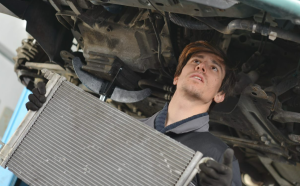
Radiator Repair in Baltimore, MD

Does Your Car Need a Radiator Repair in Baltimore, MD?

Your car engine works hard and generates a lot of heat, so it needs a fully-functioning radiator to keep it cool. Radiator problems can lead to serious problems down the line, but how do you know when it's time to contact your Toyota dealer for timely radiator repair? Read on to find out. Overview The radiator runs water and coolant through the engine to absorb the heat generated by combustion and then uses the airflow through the front of the vehicle to cool the liquid down again. However, there are a number of ways in which this system might go wrong. more Be Alert to Leaks Coolant comes in a variety of bright colors, depending on the manufacturer, and if you see a leak of the same color from underneath the car then it means there's a leak in the system. This might be from a crack or a faulty hose, but if left untreated, it will drain your radiator of fluid and render it ineffective. A mechanic can identify the source of the leak and may be able to patch it.   It's also worth checking your coolant levels regularly, although remember not to top them up unless the engine is cold. Watch Out for Rust While you're checking your coolant, look at the color through the transparent sides of the reservoir. If it's brown or discolored, then it has probably been contaminated by rust. If you can see rust on the outside of the radiator itself, you can assume that it's probably also building up on the inside as well.   Rust can cause serious problems in the system, as it mixes with the coolant to prevent it from absorbing heat effectively and forms a corrosive sludge that will damage other parts of your engine. If this occurs, the whole radiator system will need to be flushed. Stay Aware of the Temperature Because your car radiator is designed to keep it cool, overheating is a common symptom of radiator problems. If your car has one, keep an eye on the temperature gauge, and never ignore a dashboard warning light or steam from under the hood.   The radiator is controlled by a thermostat that monitors temperatures under the hood. It could be that this has broken and is no longer able to detect when the engine needs cooling, but either way, you need a professional opinion on the problem.   A malfunctioning radiator can lead to engine block, cracked cylinders, and issues with the transmission. At worst, it could mean that your entire engine is damaged beyond repair, so don't hesitate to act on your concerns if you think there's a problem. Schedule an appointment at DARCARS Toyota of Baltimore, and we'll make sure that your car receives the very best diagnosis, maintenance, and repair. You can also discover many of the essential auto repairs we can handle for you at our certified Toyota service center in Baltimore, MD today!

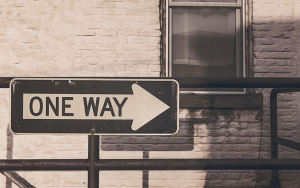
One way street sign in Baltimore, MD

4 Tips for Navigating Maryland's One-Way Streets

Baltimore, MD, is an exciting place to be, with many things to do. But driving in the big city can be challenging, especially considering the number of one-way streets in the city. If you're looking for tips on navigating one-way roads, read on! Take it Slow When you're driving, caution should be at the forefront of your mind. Whether you're heading off on a road trip down the freeway or navigating through a maze of city backstreets, it's always a good idea to take things slow and steady. more This is an especially good idea when it comes to one-way streets. If you're uncertain about how to drive on one of these roads or you lack experience, it's a good idea to slow down and give yourself a little more decision-making time. Consider taking five miles per hour off your driving speed, which should help you navigate these roads. Look for the Signage All one-way roads are well-signed, so pay close attention to avoid accidents. You'll see an arrow symbol pointing in the direction of travel on the street. If you get confused and try entering the road from the wrong side, you'll see clear no-entry signs.   When you're cruising in the city, you need an efficient vehicle to save on fuel costs. The 2022 Toyota Corolla Hybrid has great mileage in the city and on the highways and it's stylish too! Watch Out for Bike Lanes Drivers need to be alert for bike lines whenever they're on the road. Some bike lanes can be found on one-way streets. Although they will be clearly marked, they may take up a large portion of the street.   In some cases, bike lanes may run against the flow of traffic on a one-way road. So, keep your eyes peeled and give cyclists as wide a berth as possible. If you're too close to a cyclist, a slight swerve or even a bump in the road can cause you to make contact with the bike with potentially disastrous results. If Something Goes Wrong – Stop! One-way roads are mostly safe places to drive. But occasionally, something goes wrong. A car might enter the wrong side of the road or the road could be blocked.   The best policy is to keep your wits about you and perform an emergency stop if necessary. Reducing your speed and then stopping in a safe area will reduce the risk of accidents. Be ready to make an emergency stop at all times.   Getting around Baltimore is simple when you're prepared with all of the best driving tips from us at DARCARS Toyota of Baltimore. So whether you're looking to buy a new car or just visiting to discover more tips & tricks, we have you covered!

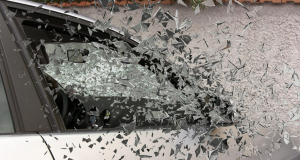
Car Collision in Baltimore, MD

What Should You Do If You Get Into a Collision in Maryland?

A car collision is nothing to wish for but something you must be prepared for. Here are the five steps you need to follow if you happen to be at the scene of an accident in Baltimore, MD, including what you need to do for the collision repair process. Check Yourself and Others for Injuries The very first thing you have to do is check yourself for injuries. Make sure you're okay and able to help others. Then, check on your passengers. Hopefully, nobody will be seriously injured. If you suffered severe trauma or any other injury, stay still and call the emergency services immediately. If anyone else is seriously injured, don't move them unless it's indispensable. Moving an injured person can do more harm than good! more Get to a Safe Spot If it's not too dangerous to move, walk to the sidewalk or side of the road. Moving your vehicle too (if possible) is a good idea – otherwise, it could pose a safety risk. Nevertheless, your safety and the safety of your passengers come first. Moving your vehicle is a distant second: make sure you're away from harm before figuring out what to do with your car. Call 911 (Legal Requirement in Baltimore, MD) Maryland state law requires you to call 911 if an accident results in property damage, injury, or death. More likely than not, the collision you just went through resulted in any of these things (hopefully, nothing too serious). Move to a safe spot and call 911 to report the accident. After that, wait until the authorities arrive. If you feel your life is in danger, be explicit about it when you call. Document Everything for the Collision Repair Process Although an accident is far from a pleasant experience, you must keep calm and document everything. That includes writing the names of the responding officers, taking pictures of the accident, talking to witnesses, and exchanging information with other parties involved (including full name, insurance information, and car description). Before doing that, try to move your car somewhere safe and turn the hazard lights on. Contact Your Insurance Company Notifying your insurance broker while at the scene of the accident is a good idea. That way, they will tell you what they need to file your claim correctly and help you through the entire process. Your insurance company can help you deal with towing too. Nevertheless, if you suffered a severe injury, it's better to leave this part for later.   We hope this blog from DARCARS Toyota of Baltimore comes in good use anytime you might need it. Lastly, in the case of an accident, you can rely on our local collision repair center in Baltimore, MD, to repair your car back to good condition.

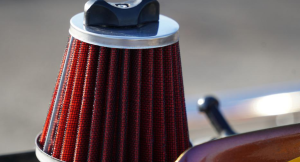
Car Air Filter in Baltimore, MD

Does Your Toyota Need a New Car Air Filter in Baltimore, MD?

Air flows through your radiator into the air filter. This filter traps pollen, dirt, and other impurities and allows clean air into the intake manifold. Over time, this filter will clog up and will need to be replaced. As your Toyota dealer, we can replace your car air filter for you. We'd like you to know some of the signs that your filter needs replacement. Black Smoke From the Exhaust Black smoke belching from the exhaust is a sign that something is wrong. Normal exhaust smoke is white, and it's been cleaned of dangerous chemicals. If the smoke is black, this means much of the fuel in the combustion chambers isn't being burnt. The main reason for unburnt fuel is a lack of air in your engine, and this means an air filter problem. more Combustion requires a 14:1 ratio of air to fuel to operate efficiently. If there isn't enough air in the intake manifold, combustion will be fuel-rich. This means there's more fuel than air, and much of this fuel won't burn. The unburnt fuel will be dumped into the exhaust system, and it will exit as black smoke. Your Filter Looks Dirty The air filter is one of the components in your car that you can easily check without special knowledge or tools. It's housed in the air filter box near the radiator grille. Your car manual will show you the position of the box. All you need to do is pop the hood and find and open the box.   If the filter is brown or black, this means it needs to be replaced ASAP. Sometimes the filer can look clean, but it's still clogged. The numerous folds in the filter that trap dirt can also hide the trapped dirt. Our technicians can remove and check the filter for you and replace it if it's blocked. Strange Engine Sounds Coughing or slurping sounds from your engine usually point to a lack of air. Air enters the intake manifold through the air filter, and fuel enters as you step on the gas. The air and fuel will mix in the manifold and are then injected into the cylinders. Once inside the cylinders, this mix will be compressed and then ignited by the spark plugs.   If the filter is blocked, this process doesn't work correctly. The fuel-rich environment makes combustion difficult as the spark plugs can't ignite correctly due to the lack of air. The coughing or slurping sounds are caused by the spark plugs trying to spark.   Replacing a damaged air filter will dramatically improve your engine performance. You can trust your DARCARS Toyota service center to care for your car filter needs. Click here to learn more about your Toyota's engine air filter today!

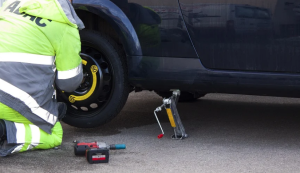
Car Break Down in Baltimore, MD

What Should You Do if Your Car Breaks Down in Baltimore, MD?

We know you take care of your Toyota Corolla, Camry, or RAV4, but when the unforeseen happens and your car breaks down on the roads in and around Baltimore, MD, don't stress. Use the car breakdown tips below to keep yourself and your vehicle safe. Turn On Your Hazard Lights and Get Your Car off the Road If you've got car trouble on the road, you should first turn on your hazard lights. If you can still drive your car, immediately look for a safe place and pull over. Park on the right-hand shoulder as far away from the traffic as you can. You can also pull over on your left shoulder if you break down on a highway or interstate. Please make sure you don't turn off your hazard lights and ensure they stay on until help arrives. more Make Your Vehicle Visible to Other Drivers Your broken-down car doesn't just put you at risk but also other drivers. You want to make sure that your vehicle is visible. If your car is safely on the shoulder, open your hood to let other drivers know you have car trouble. Place your reflective warning triangle approximately ten feet directly behind your car.   To take extra precautions and make your vehicle even more visible, put one triangle behind the right side of your car and one about 100 feet away in line with the middle of your vehicle. If you can't get your car off the road, hang a brightly colored piece of fabric out of your window and if it's after dark, turn on your cabin light. Make a Note of Your Surroundings Now that you've made sure your car is visible, find out exactly where you are. If you've got a pen and paper handy, write down the street name and any road signs or landmarks you can see to make it easy to find your car. If you're on a highway, write down the mile marker or the last exit number. Call for Roadside Assistance Call your dealership for roadside assistance when you are sure that your car is clearly visible to other drivers and you know exactly where you are. If your vehicle is standing safely on the shoulder, it's best to stay in your car and to keep the doors locked until help arrives. If your car broke down on the road and you can't move it, especially on a highway or interstate, exit your vehicle carefully, check for traffic, and wait on the shoulder.   Avoid getting stranded next to the road by keeping your Toyota in top shape. To ensure your Toyota won't let you down, schedule a service appointment with our DARCARS Service Center. The qualified Toyota technicians will ensure your vehicle is in top running condition and that it will help you get to your destination. Want to learn more about maintaining your Toyota? We have you covered!

2022 Toyota Corolla Hybrid in Baltimore, MD

3 Impressive Features of the 2022 Toyota Corolla Hybrid

If you want an affordable vehicle without sacrificing dependability, specs, or style, the 2022 Toyota Corolla Hybrid is the answer you've been waiting for. This hybrid comes to us from a trusted company that's been harboring a strong reputation in the US. This year's Corolla is the 12th generation of its namesake. With the most efficient fuel economy in its class and a powerful 1.8-liter four-cylinder engine that offers 139 horsepower, this four-door sedan is the best of all worlds. Toyota Safety Sense 2.0 Toyota Safety Sense 2.0 is well known for good reason. This system integrates safety features into all parts of your driving experience for added peace of mind. The Pre-Collision System contains additional pedestrian detection software. This will keep an eye on the space in front of your vehicle. It will alert you if you're too close to a potential collision object, such as a person on foot, a cyclist, or another vehicle. The Dynamic Radar Cruise Control software will adjust your speed in relation to the car in front. more The Lane Departure Alert will assess where you are in your lane. It will alert you if you're drifting into the neighboring lane. It also has Steering Assist and Road Edge Detection in case you drift towards the shoulder. There is also a Lane Tracing Assist and a Road Sign Assist. The former keeps you in the center of your lane. The latter identifies road signs and puts them on your instrument panel. Star Safety System This system was built to improve the smoothness of performance, driver input, and overall safety. It is an improvement on the earlier Vehicle Stability Control System. The previous system would only activate after a skid or spin had occurred. The Star Safety System implements constant small, undetectable corrections to prevent the skid from happening in the first place. This system includes Vehicle Dynamics Integrated Management, which acts as a task manager for the other aspects of the system.   In addition to the ABS, Traction Control, and Brake Assist, this task manager also oversees the Vehicle Stability Control System. This will individually assess all four tires and reduce power as needed. The system also possesses the Electronic Brake-Force Distribution software. This makes sure an appropriate amount of force is applied to each tire when braking to a stop. The Smart Stop Technology this program offers will watch for accidental acceleration. It will stop the vehicle completely to avoid accidents. Specs To Remember Still not convinced? Thanks to Corolla being a hybrid, the fuel efficiency boasts a whopping 52 mpg combined! The comfortable inside combines practical with premium. It can seat five adults thanks to the 88.6 cubic feet of space. The trunk offers 13.1 cubic feet of space. This can be greatly increased by folding down the 60-40 split rear bench. The climate control inside is completely automatic. The multimedia touchscreen is seamlessly integrated onto the dashboard.   This year's Corolla Hybrid is an improvement on perfection. You can't go wrong with the Toyota brand, and we feel this year's hybrid is the best of the best. We are proud to have this model available for purchase at our dealership. View our available Corolla Hybrids for sale in Baltimore, MD now!

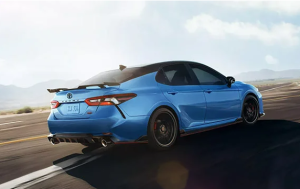
Toyota Camry in Baltimore, MD

How to Protect Your Car During Maryland's Hot Summer Weather

With the hot weather in Baltimore, MD, it's important to take steps to protect your car. Sun can fade and damage your car's paint job, and the heat can be tough on the engine. Here are a few tips to help keep your car looking great and running smoothly during this summer weather. Park in the Shade Whenever Possible The dog days of summer can be tough on your car. Punishing heat and harsh UV rays take their toll on your car's paint job, tires, and interior. And if you don't take steps to protect your car from the summer sun, you could end up with some serious problems down the road. Parking in the shade will help keep your car's exterior from getting too hot and will also protect your tires from degrading due to excessive exposure to direct sunlight. more Use a Windshield Sun Protector To Keep the Interior Cool Windshield sun protectors attach to your windshield with suction cups and reflect sunlight away from the car, keeping the interior cooler. Some models even come with side flaps that help shade the windows and keep the inside of your car resistant to overheating. Sun protectors can also help keep your dashboard and upholstery from fading. It's easy to shop for window shades and other Toyota accessories online with DARCARS Toyota of Baltimore anytime you need something extra to enhance your drive. Check Fluid Levels and Tire Pressure Regularly As the summer heatwave hits, one of the best things you can do is to check your fluid levels regularly. Make sure your coolant level is topped up, and check your oil level, too. It's also important to keep an eye on your tire pressure because as the temperature rises, so does the pressure in your tires. If left unchecked, this can lead to a blowout. Rather have a professional check & service your vehicle? Schedule an appointment online now! Keep Your Car Clean Regular washing helps to remove dust and dirt that can scratch and dull the paint job. In addition, waxing provides an additional layer of protection against the sun's harmful rays. Protect Your Car Seats In hot weather, leather seats can dry out and crack, so it's crucial to protect them from the sun's rays. There are a few different ways to do this. First, you can buy a leather conditioner and apply it regularly to keep the leather supple. You can also invest in a UV-resistant seat cover, which will help shield the leather from the sun's harmful rays.   At our dealership here in Baltimore, MD, we understand that the summer can be brutal. We hope these tips help protect your car this season!

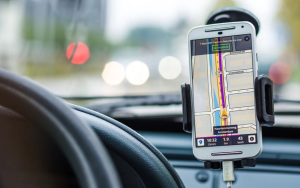
Navigation in car in Baltimore, MD

What Are the Rules for Student Drivers in Maryland?

Getting your driver's license is incredibly exciting, but if you live in Baltimore, MD, passing your test isn't the end of the road. Student drivers still have to complete certain requirements and keep their driving records clean for at least 18 months. Read on to find out more about the rules you have to follow if you've recently qualified for your provisional driver's license. First things First Once you've completed your driver skills test, you'll obtain your provisional license. During this stage, you can gain more driving experience without direct supervision, but you'll still have to follow a number of rules that are designed to protect you and those around you. If you fail to comply with the restrictions, you risk having your driver's license revoked, and it will be harder for you to get your full license in the future. more Restrictions The most important rule is that you must keep a clean driving record if you want to be eligible for a full driver's license. Anyone under the age of 21 can't have any measurable amount of alcohol in their blood while driving. Those who are still under 18 are not allowed to drive with children for the first 151 days unless they are close family members.   Additionally, young drivers must stay off the roads between 12 am - 5 am unless they are supervised by an experienced adult or going to or from work, an athletic event, a school activity, or a volunteer program. Anyone with a provisional license is not allowed to use wireless communication devices like cell phones while on the road - even hands-free devices - and they can't drive without a safety belt on. Sanctions Failing to comply with the above-named rules or the traffic laws has serious consequences for your future as a driver. If you break the law, your provisional license will re-start, and the time it takes for you to get a full license is extended. What's more, you will have to attend a driver improvement program, and there might be a suspension if it's your second or third offense.   If you disregard one of the restrictions, you might have your license suspended for up to one year, or you might have to participate in an ignition interlock program. The guardians or co-signers of under-18s can also be notified of violations. Getting Your Full License When you've maintained a clean driving record for at least 18 months, you become eligible for a full driver's license. This happens automatically, and you don't have to do any additional tests or fill in applications. Instead, an attachment card will simply be mailed to you, which you can carry around with your provisional license. When you next renew, you can convert to a full license.   After you've passed your driving test, you'll hold a provisional license for at least 18 months. During this time, you have to comply with certain rules and regulations and keep a clean record. If you're under 18, there are some additional rules, and you won't be able to drive at night unless it's for a specific reason like school or work.   We hope our blog has given you all the information you're looking for! If you're a new driver and looking for a car that's dependable and safe as your first ride, we recommend any of the Toyotas on our lot! Check out the cars we have for sale in Baltimore, MD, today!

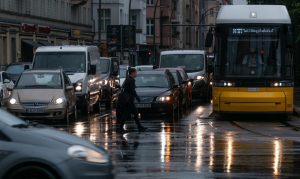
City Traffic in Baltimore, MD

How to Deal With Road Rage on Maryland Roads

Everyone gets mad, but it's best to avoid getting mad on the road. When you're behind the wheel, your safety and the safety of the people around you rely on keeping a clear head so you can obey traffic laws. Learn more about how to deal with road rage in Baltimore, MD, today before getting behind the wheel. When it comes to rage on the road, there are usually two sources. The first is your irritation with other drivers, which may cause your driving to be unsafe. The second source is an aggressive driver on the road with you, which may cause their driving to be unpredictable. In either case, here are a few tips to minimize frustration on the road. more Make Your Car Calm and Comfortable One of the most effective strategies you can use to minimize rage is making your car calm and comfortable. The state of your vehicle can affect your mood, so keeping your car comfortable can greatly benefit your mood. For example, soothing air fresheners, air conditioning, heaters, and calming music can all help you enjoy your time behind the wheel. Drive Defensively and Responsibly Defensive drivers can prevent dangers on the road by reducing collisions and cutting down on distractions. As a general rule of thumb, following speed limits, maintaining adequate distance between vehicles, and being aware of your surroundings are all defensive driving strategies that can be used to counteract aggressive drivers on the road.   Defensive driving is one of the best ways to deal with other drivers who are raging. This is because the core of defensive driving is paying attention to other drivers. If you notice a driver is being reckless, it's best to slow down and avoid the driver to keep yourself safe. Ignore Aggressive Drivers If a driver is trying to provoke you by using their horn, cursing, or tailgating, the best thing you can do is ignore this aggression. If you respond to an aggressive driver with frustration, all you do is elevate the potential danger of the situation. By not reacting to aggressive drivers or outright avoiding aggressive drivers by pulling over, you can more easily deal with dangerous drivers on the road. Keep Things In Perspective Finally, it's important to keep things in perspective to minimize your irritation while you're driving. Even if traffic is bad or you're running late, or you've had a bad day, these negative factors are all small in the grand scheme of things and will gradually be forgotten as soon as you get to your destination.   Some drivers get angry on the road, but you don't have to be one of them. You can deal with aggressive drivers by making your car as comfortable as possible, ignoring aggressive drivers, and keeping things in perspective. We hope you enjoyed reading our safe driving tips! For more helpful blogs for all things automotive and local, we have you covered at DARCARS Toyota of Baltimore.

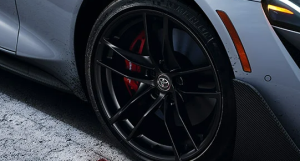
Toyota Brake in Baltimore, MD

How Often Should Your Toyota Get Brake Service From Your Toyota Dealer?

Regular brake service from the qualified technicians at your Toyota dealer is essential for your safety on the road. The skilled Toyota technicians perform comprehensive brake system inspections, replacements, and repairs that guarantee proper vehicle control, stopping power, and long-lasting braking performance. Brake Inspection Intervals Your brakes must be tested, serviced, and repaired at regular intervals to prevent brake failure and to keep you safe on the road. Every Toyota model comes equipped with a service schedule that includes brake inspections, brake pad measurements, brake fluid changes, and brake part replacements at factory-recommended maintenance intervals. more Generally, the factory recommends a thorough brake inspection with an oil change every 5,000 miles or 6 months, whichever comes first. Once a year, at the 10,000-mile interval, the technician will check the brake lines and hoses, and at the 20,000-mile maintenance interval, replace the brake fluid if required. Check your owner's manual for the brake inspections, brake fluid changes, and brake part replacement intervals for your specific model, or ask your Toyota technician for information. Expert Toyota Brake Inspections, Tests, and Repairs When you bring your Toyota to us for service, the qualified Toyota technicians perform top-quality maintenance and repair work you can rely on to keep your vehicle performing at its best. During a brake inspection and service, the skilled technicians perform thorough brake inspections, tests, and repairs using cutting-edge equipment and advanced technology. Quality Genuine Toyota Brake Components If your Toyota requires brake replacement parts, the technician will expertly install quality Genuine Toyota Brake Components. The brake components are tested and approved to fit your Toyota perfectly and guarantee reliability and long-lasting braking performance. Signs It’s Time For a Brake Repair In addition to bringing your vehicle to us for routine brake system maintenance, also look out for the following signs that will warn you when it's time for a brake repair. High-Pitched Squealing Sounds When you step on the brakes and hear shrill squealing sounds, it's the wear indicators built into the pads warning you that the brake pads are thin. New brake pads are eight to twelve millimeters, but it's best to replace them ASAP when they reach 3 millimeters or less. Horrible Grinding Noises If you don't get the brake pads replaced in time, they will wear down entirely, and the bare metal will scrape against and damage the rotors. That's when you'll hear that horrible grinding noise. Brake Pedal Vibrations If you feel vibrations through your brake pedal, it could be due to warped or thin rotors. Rotors warp due to age or from hard braking. Slow Brake Response If you apply the brakes and your car is slow to respond, check the ground under your vehicle for brown puddles that are not as slick as oil. It could be that your car is leaking brake fluid. There could also be an air leak in the brake hose. Our technicians will pinpoint the leak and repair it in no time. Your Car Pulls to the Side When you step on the brake pedal and your car pulls to the left or right, the brake linings are worn unevenly, or the brake fluid is dirty. A service from one of our qualified Toyota technicians will quickly sort out the problem.   With routine brake inspections and services from skilled Toyota technicians at the factory-recommended maintenance intervals, your brakes will have the stopping power you need to be safe on the road. Ready to schedule a brake service in Baltimore, MD? Easily do so online today! We look forward to serving you at DARCARS Toyota of Baltimore.

Auto Repair in Baltimore, MD

3 Signs You Need A Radiator Repair in Baltimore, MD

To operate efficiently, your Toyota engine runs at a high temperature. Your car has a very efficient cooling system to control engine heat and prevent damage to any of its components. Your radiator is the center point of this system, but it can suffer damage. When you need a radiator repair, your Toyota dealer is here to help you. These are some of the signs that you have a radiator problem. Broken Water Pump When your engine gets too hot, liquid coolant is released into the engine. This liquid can absorb heat, and as it's pumped through the system, it draws in engine heat. This heat has to be removed, and that's where the radiator comes in. Once the liquid reaches the radiator, it enters rows of thin aluminum tubes, where the liquid is cooled by air flowing in through the radiator grille. more For this system to work, the coolant has to be under pressure and move at high speed. The water pump forces coolant through the system continuously until the engine temperature drops. If the water pump fails, coolant will still be released, but it won't be able to move through the system. Your engine temperature will rise, and this can lead to overheating. Damaged Tubes The thin aluminum tubes, also known as fins, are designed to allow the greatest possible surface area for cooling. They're made from aluminum to allow for more rapid cooling of the hot coolant. These tubes, however, are delicate. Aluminum is relatively easy to damage, and any grit or other debris that are thrown up from the surface can bend or break them.   Damaged tubes will restrict the amount of coolant that can be cooled at any time, which increases pressure on the cooling system. If enough tubes are blocked or damaged, your radiator won't be able to cool the coolant. Hot coolant will build up in the cooling system, and this can cause your engine to rapidly overheat. We can't repair the damaged tubes, but we can replace the radiator to fix the problem. Jammed Thermostat Your engine runs most efficiently at a temperature between 185℉ and 220℉, but this temperature has to be controlled. The thermostat is a small valve that will open if the temperature in your engine reaches 180℉ and release coolant. This coolant is pumped through the system by the water pump. The thermostat can fail, and if it does, it will jam open or closed.   If the thermostat jams open, it will continuously release coolant. Your engine will become colder and less efficient, and you'll use additional fuel. If the thermostat jams closed, it won’t release coolant regardless of your engine temperature. Without coolant, your engine temperature will climb.   If your engine temperature seems to be rising, don't risk an overheated engine. Contact us at DARCARS Toyota of Baltimore if you have questions about your radiator or schedule a service appointment online. Our experts will examine your car and find and fix the problem before any severe damage occurs.

Contact Us

Fill out this form below and we'll contact you shortly
*Required Fields